From Clay to Cup: How Handmade Boleslawiec Pottery Is Created
Boleslawiec pottery, also known as Polish pottery or Bunzlauer ceramics, is a globally recognized symbol of craftsmanship, durability, and cultural heritage. But how does this artisanal product go from a raw piece of clay to the beautifully glazed mug that graces your table?
1. The Origins: Boleslawiec and Its Unique Clay
The journey begins in Boleslawiec, a small town in Lower Silesia, Poland. This region is renowned for its natural deposits of high-quality white clay, rich in feldspar and silicon — crucial elements that give Boleslawiec pottery its signature resilience and cream-toned base.
The clay is excavated from nearby quarries, purified, and then stored in a moist environment to maintain its malleability. Artisans treat this material with reverence; after all, it is the essence of every piece of Polish pottery.
2. Shaping by Hand: Traditional and Modern Techniques
Once the clay is ready, skilled potters shape it using age-old techniques. Whether it’s thrown on a potter’s wheel or shaped using plaster molds, this stage demands precision and experience. The artisans ensure that each form — be it a coffee mug, dinner plate, or butter dish — adheres to traditional Boleslawiec styles while offering practical modern usability.
After shaping, the items undergo a slow drying process, which can take up to several days. This ensures the pottery doesn’t crack or warp during firing.
3. First Firing: Strength and Structure
After drying, the pieces are fired in kilns at temperatures around 850°C (1560°F). This bisque firing hardens the clay, transforming it into ceramic and making it ready for the next — and most enchanting — step.
4. Hand-Painting: Art in Every Detail
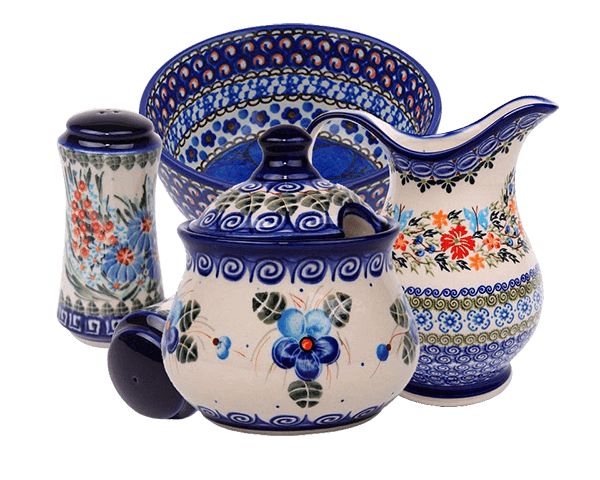
Perhaps the most iconic feature of Boleslawiec pottery is its hand-painted decoration. Using fine-tipped brushes, artisans apply intricate patterns in cobalt blue, green, red, and sometimes yellow. Traditional motifs include the peacock’s eye (symbolizing prosperity), floral garlands, and geometric dots.
These decorations aren’t merely ornamental — they are steeped in Polish folk traditions and passed down through generations.
For a closer look at the patterns and what they represent, visit our Polish pottery design guide.
5. Glazing and Final Firing
After painting, each piece is dipped in a transparent glaze that not only enhances its aesthetic appeal but also makes it resistant to chips, scratches, and high temperatures. The final firing, done at temperatures exceeding 1200°C (2190°F), ensures a durable finish that is dishwasher, microwave, and oven safe.
The result? A timeless piece of functional art that can be cherished for decades.
Want to explore the full journey from clay to cup? Browse our exclusive collection of handmade Boleslawiec mugs.