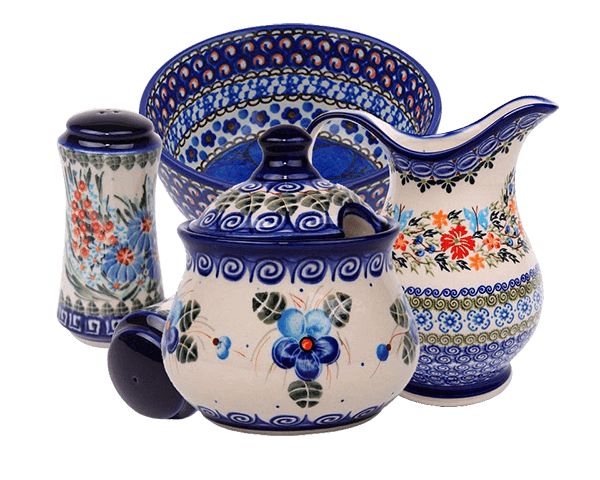
From Silesia to the World: The History of Bolesławiec Pottery
Today, Bolesławiec pottery is a hallmark of Polish craft excellence. But its journey from a small town in Lower Silesia to dining tables across the globe is filled with rich history, resilience, and reinvention.
1. The Town of Bolesławiec – A Clay-Based Legacy
Nestled along the Bóbr River, the town of Bolesławiec (formerly Bunzlau) has been known for its high-quality clay deposits since the Middle Ages. As early as the 14th century, potters in the region began firing clay in wood-burning kilns, producing durable stoneware with simple shapes and earthy tones.
It wasn’t until the 18th century that decorative techniques began to flourish, particularly the development of the sponge-stamping method, which revolutionised production and design.
Want to learn more about traditional techniques? Check out our other articles on Boleslawiec pottery.
2. Bolesławiec Under German and Polish Influence
Due to its location in Silesia, Bolesławiec has seen shifts in sovereignty over centuries – from the Kingdom of Bohemia, to Prussia, Germany, and finally Poland after WWII. Despite political changes, the pottery tradition remained strong, handed down through generations of artisans.
In the post-war years, local artists revived the craft under Polish stewardship, adapting it for modern audiences while keeping the heritage intact.
3. Global Recognition and Artistic Revival
In recent decades, Bolesławiec pottery has gained international acclaim, particularly in the UK, US, and Japan, thanks to its blend of functionality, beauty, and cultural richness.
Today, it’s not just collectors who prize these ceramics – chefs, home cooks, and designers incorporate Bolesławiec pieces into everyday living.
Ready to own a piece of this legacy? Explore our pattern guide.