The Pleasure of Afternoon Tea, Done Properly
There is something wonderfully unhurried about afternoon tea. Whether you’re gathering a handful of close friends on a Saturday, hosting neighbours for the first time, or simply treating yourself to a quiet half-hour with a pot of something good, the ritual deserves more than a chipped mug grabbed from the back of the cupboard. It deserves ceremony — and Bolesławiec Polish pottery, with its hand-painted patterns and warm stoneware weight, delivers that ceremony effortlessly.
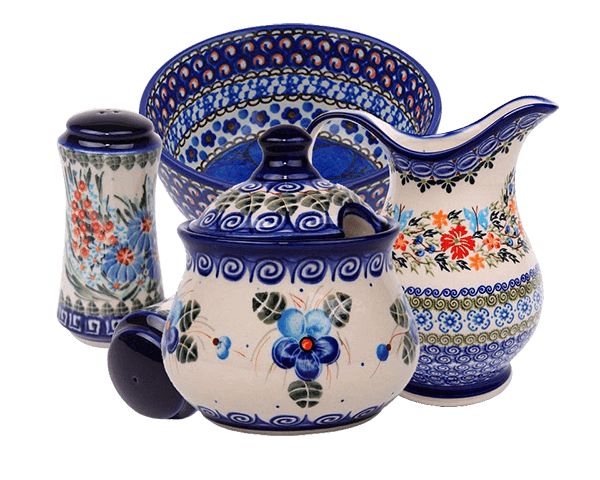
Polish pottery has been made in the Lower Silesian town of Bolesławiec for centuries, and today its distinctive cobalt-and-cream motifs — peacock eyes, delicate florals, trailing vines — are recognised the world over. For afternoon tea in particular, this pottery strikes a balance that very little else manages: it feels genuinely special without being precious. You can use it every single day, put it in the dishwasher, and it only seems to become more beautiful over time.
Why Polish Pottery Works So Well for Afternoon Tea
British afternoon tea is, at its heart, a celebration of small pleasures layered together — a warm pot, good leaves, a plate of something sweet, and conversation that wanders wherever it likes. Polish pottery fits this occasion for several practical and aesthetic reasons:
- Heat retention: Bolesławiec stoneware is dense and thick-walled, which means your tea stays warmer for longer — a genuine advantage when conversation is flowing and you’ve forgotten to drink it.
- Generous proportions: Polish mugs and cups tend to have a satisfying heft and a comfortable handle, making them easy to hold for extended periods without any awkward balancing act.
- Pattern variety: From classic blue-on-white peacock eyes to richer autumn palettes and painterly florals, there is a Bolesławiec pattern to suit every taste and every table style.
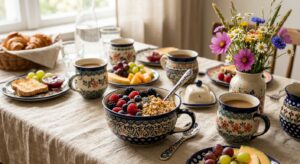
- Mix-and-match charm: Unlike fine bone china, Polish pottery actively invites mixing patterns. A table set with four different designs feels curated rather than mismatched, giving your afternoon tea a relaxed, joyful energy.
If you’ve been exploring Polish pottery for the home for a while, you’ll already know that each piece is individually hand-painted by skilled artisans using a sponge-stamp technique, meaning no two items are ever completely identical. For afternoon tea, that individuality feels meaningful — your guests each hold something quietly unique.
Building an Afternoon Tea Table with Bolesławiec
Start with the Mugs
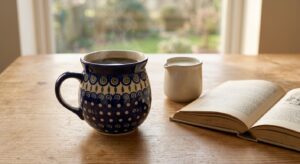
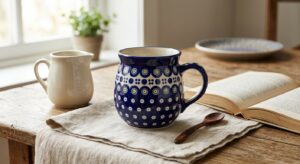
For an informal afternoon tea, mugs are perfectly appropriate and arguably more welcoming than delicate teacups. The standard Bolesławiec mug holds around 350–400ml, which is ideal for a generous pour without needing to top up constantly. Look for the loop-handle style if you’re serving milky teas or creamy hot chocolates alongside traditional brews — it gives a more secure grip and suits a slightly larger pour.
If your guests have different preferences — Earl Grey for one, a strong builder’s tea for another — consider labelling each mug lightly with a small card name tag tucked beneath the handle. It becomes a charming personal touch rather than a logistical necessity.
Plates: Small and Purposeful
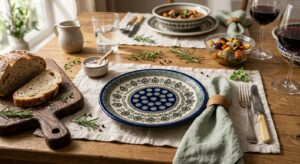
Side plates and dessert plates are the workhorses of an afternoon tea spread. You’ll want something that can hold a scone, a slice of Victoria sponge, or a few finger sandwiches without crowding. A 7¾-inch salad or dessert plate is the ideal size — large enough to be useful, small enough to feel dainty. In a lively pattern such as a fresh green or a classic blue Peacock Eye, these plates elevate even a simple shop-bought biscuit into something worth photographing.
Lay your plates out before guests arrive so they can help themselves freely. Stoneware handles the weight of a generous slice of cake with ease, and you won’t need to worry about thermal shock if your scones have just come from the oven.
Bowls for Clotted Cream, Jam and More
One underrated use of Polish pottery at afternoon tea is small bowls for condiments. A little Bolesławiec bowl filled with clotted cream or strawberry jam looks a hundred times more appealing than a plastic tub left on the table. Similarly, a small loop-handle bowl works beautifully as a sugar bowl or a vessel for lemon slices. These small touches cost very little but create the impression that real thought and care has gone into the afternoon.
Styling Tips for a Beautiful Afternoon Tea Table
You don’t need a mountain of matching crockery to create a table that feels cohesive. Here are a few practical ideas:
- Choose two or three complementary patterns rather than one. Blue peacock eye alongside a floral or leaf motif works particularly well, as the underlying palette remains consistent.
- Use a linen tablecloth in a neutral tone — cream, stone or pale grey — to let the pottery patterns stand out without competing.
- Add height with a teapot at the centre. A 1.7-litre Bolesławiec ceramic teapot makes a striking centrepiece and is genuinely functional for a gathering of four to six.
- Keep floral arrangements low and simple. A jam jar of garden flowers tucked between the plates is all you need; anything taller obscures the pottery and blocks conversation.
- Layer your food on tiered boards or simple wooden boards rather than plastic trays, and the stoneware will do the decorative heavy lifting around them.
Afternoon Tea as a Gift Occasion
If you’re considering giving a pottery gift to mark a birthday, a retirement, or simply to say thank you, an afternoon-tea-themed selection is a genuinely thoughtful approach. A pair of mugs, two dessert plates, and a small bowl for cream or jam can be wrapped together beautifully, especially in a linen-lined hamper or a wicker basket with a few tea sachets tucked in alongside.
Bolesławiec pottery lasts a lifetime with reasonable care, which makes it the kind of gift that gets used daily rather than stored away. Browsing reviews and recommendations for Polish pottery is a good place to start if you want to match a pattern to someone’s existing kitchen colours or personal style before committing.
A Final Word on the Joy of It
Afternoon tea is one of Britain’s loveliest traditions, and it asks very little of us beyond the willingness to slow down for an hour or two. Polish pottery, made by hand in a tradition stretching back generations, seems to understand that instinctively. It has weight, warmth, and a quiet beauty that never shouts — it simply makes the moment feel more considered, more generous, more like home.
Set the table, warm the pot, and invite someone you care about. The pottery will take care of the rest.