There’s Something About a Proper Stew
Stew night is one of those quiet rituals that never really goes out of fashion. Whether it’s a bubbling beef and ale number on a drizzly Tuesday, a fragrant lamb and root vegetable pot on Sunday afternoon, or a warming chickpea and tomato affair that’s been ticking away in the slow cooker all day — a proper stew is comfort food at its most honest. And honest food, we think, deserves an honest bowl.
That’s where Polish pottery earns its place at the table in a very particular way. These are bowls built for exactly this kind of cooking. Deep, sturdy, generous in size, and absolutely beautiful to look at. They don’t just hold your dinner — they make it feel like a proper occasion.
Why Polish Pottery Suits Stew So Well
Bolesławiec stoneware has been made in the same corner of south-western Poland for centuries, and the craftsmanship behind every piece is shaped by practical cooking traditions as much as artistic ones. These pots and bowls were designed to be used. They’re fired at high temperatures, which gives them exceptional density and durability, and that same quality makes them brilliant for hot, liquid-heavy dishes like stew.
Here’s what sets them apart for stew night specifically:
- Deep sides – proper Polish pottery soup and stew bowls have real depth to them, meaning generous portions stay put without risk of sloshing over the edges.
- Thick walls that retain heat – the dense stoneware keeps your stew piping hot for far longer than a thin ceramic or standard earthenware bowl ever would. No more lukewarm last spoonfuls.
- Ovenproof and microwave-safe – many pieces from Bolesławiec are suitable for reheating directly in the oven or microwave, which is enormously practical when you’re ladling out seconds or warming up leftovers the next day.
- Easy to clean – the smooth, hard-glaze surface resists staining even from rich tomato-based or red wine sauces. Dishwasher-safe too, which matters on a weeknight.
If you’re looking for beautiful Polish ceramics that genuinely earn their keep in a busy kitchen, stew bowls are one of the strongest arguments for making the investment.
Choosing the Right Bowl for the Job
Not all bowls are equal when it comes to stew, and it’s worth knowing what to look for before you buy.
Size Matters More Than You’d Think
Stew is not a delicate dish. It needs room. A standard soup bowl of around 14–16 oz (roughly 400–470ml) will do the job for a modest portion, but if you serve with chunky vegetables, dumplings, or thick crusty bread balanced on the side, you’ll want something larger — closer to 18–22 oz. The loop-handled bowl is a particularly popular format in Polish pottery for exactly this reason: it gives you extra grip and a generous interior volume, making it ideal for the kitchen table.
Loop Handles vs. Traditional Rims
Loop handles — those sturdy little ear-shaped grips on either side of the bowl — are a classic Bolesławiec design feature and genuinely useful for stew. They allow you to carry a hot bowl safely from kitchen to table without reaching for oven gloves. For children, older relatives, or anyone carrying a bowl along a narrow hallway, that extra security is worth having.
Consider the Pattern
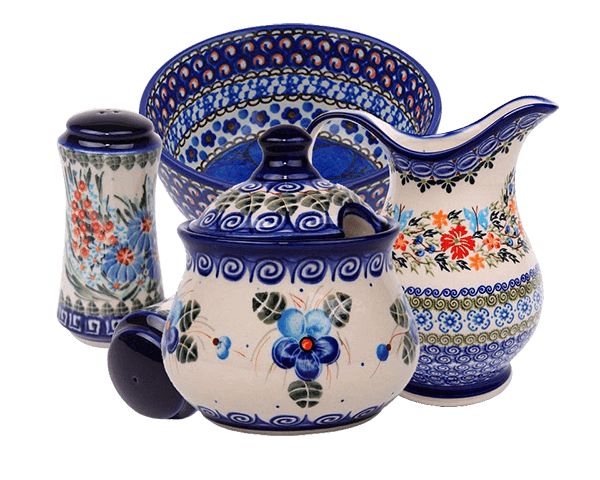
Polish pottery is famous for its hand-stamped folk patterns — the traditional blue peacock-eye design, cheerful florals, botanical sprigs, and seasonal motifs. For stew night, a bold, rich pattern works beautifully against the deep amber or terracotta tones of a casserole or hearty broth. Patterns like Bloom Garden, with its generous floral repeats, bring warmth and personality to the table without feeling fussy or out of place in an everyday setting.
Setting the Table for Stew Night
Stew night doesn’t need to be plain. One of the great joys of Polish pottery is how effortlessly it elevates even the most casual midweek supper into something that feels considered and welcoming.
Try this simple approach:
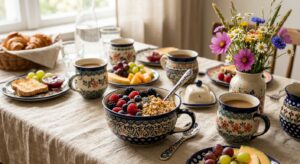
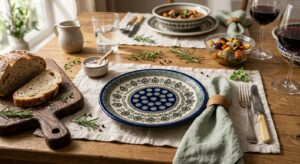
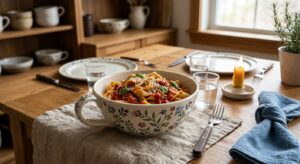
- Place your deep stew bowls at each setting on a plain linen placemat — natural oatmeal or slate grey works beautifully against the pattern.
- Add a side plate (a smaller Polish pottery piece in a complementary pattern) for your bread. Mismatching patterns is absolutely fine — in fact, it’s part of the charm.
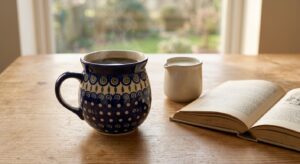
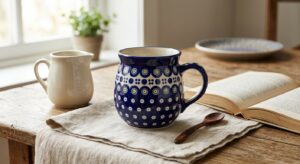
- Set out a Polish pottery mug for a glass of red, a warming cider, or an after-dinner tea. The chunky handles and hand-painted detail tie the whole table together.
- A small Polish pottery dish in the centre works nicely as a butter dish or for a handful of sea salt flakes.
The overall effect is a table that looks genuinely inviting — layered and handmade, not styled within an inch of its life. Guests will always notice, and they’ll always ask where the bowls came from.
Stew Night as a Ritual Worth Keeping
There’s a slower, quieter kind of pleasure in cooking and eating stew. It asks nothing of you except time, and in return it fills the kitchen with warmth and the kind of smell that makes people wander in from other rooms. It’s the sort of meal that suits a proper bowl, a proper table, and a little bit of ceremony — even if it’s only Tuesday.
Polish pottery seems to understand this instinctively. The weight of a well-made Bolesławiec bowl in your hands, the richness of the pattern, the warmth held in the walls — it all adds something to the experience that a supermarket ceramic simply can’t replicate. That’s why so many people who discover it tend to build a collection piece by piece, starting with one bowl and ending up with a table full of them.
If you’re new to it, stew night is honestly one of the best places to start. Have a browse of our Polish pottery recommendations and buying guides and find the bowl that calls to you. Your next stew will taste all the better for it.
A Few Final Tips for Getting the Most from Your Polish Pottery
- Avoid sudden temperature changes where possible — don’t place a cold bowl directly into a very hot oven. Let it warm gradually with the dish.
- Polish stoneware is dishwasher-safe, but hand-washing in warm soapy water will keep the glaze looking its best over years of use.
- If you’re using your bowl to serve stew directly from the oven, place it on a trivet or folded cloth on the table to protect the surface beneath.
- Store bowls stacked with a soft cloth between them if you’re short on shelf space — this protects the painted surface from minor scratches.
Good pottery, like a good stew, only gets better the more you use it. Invest in a couple of quality pieces and you’ll wonder how your table managed without them.