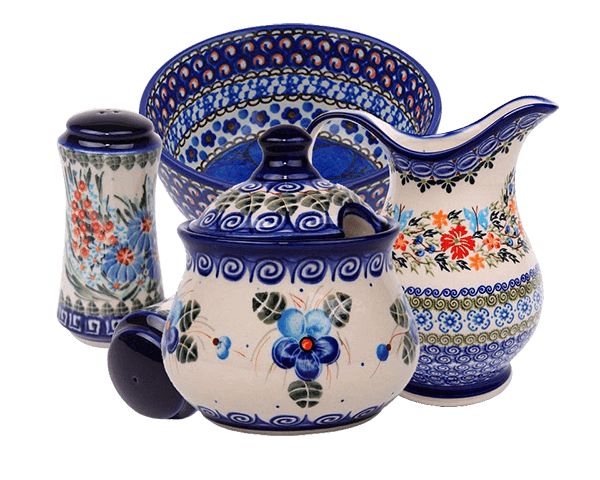
The Timeless Patterns of Bolesławiec Pottery – What They Mean and Why They Matter
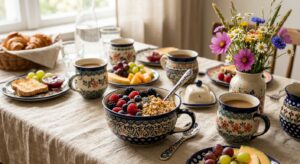
Polish pottery from Bolesławiec isn’t just beautiful – it speaks a visual language shaped by centuries of tradition. Each hand-stamped pattern tells a story, rooted in folk symbolism, natural inspiration, and regional craftsmanship. But what do these designs really mean? And why are they so important to collectors and everyday users alike?
1. The Origins of Bolesławiec Patterns
The iconic designs of Bolesławiec pottery originated in the 18th century, when local artisans began decorating stoneware using handmade stamps carved from sea sponges. This allowed for intricate, repetitive designs that could be applied evenly across mugs, plates, and bowls.
Unlike mass-produced ceramics, Bolesławiec patterns are applied by hand, one by one, giving each piece a slightly unique finish – a true testament to human craftsmanship.
Browse our collection of patterned mugs to explore traditional and modern designs.
2. What the Patterns Symbolise
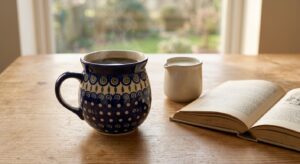
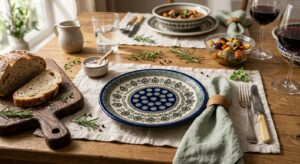
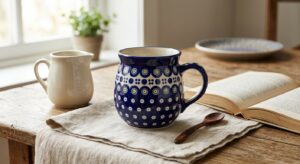
Peacock Eye (Pawie Oko): The most recognisable Bolesławiec motif, the peacock eye symbolises vision, beauty, and protection. It is often stamped in deep cobalt blue with accents of green or rust red.
Floral Vine Motifs: These soft, flowing patterns suggest growth, peace, and connection to nature – a nod to the Polish countryside and its changing seasons.
Geometric Repeats: Dots, spirals, and concentric circles reflect harmony, the cycle of life, and symmetry. Their mathematical precision is calming and visually satisfying.
Seasonal Themes: Some modern artisans incorporate motifs like snowflakes, wheat sheaves, or blooming poppies – blending folk art with storytelling.
Each pattern is more than decoration – it’s an echo of Polish heritage, carefully preserved in ceramic form.
3. Traditional Colours That Last
Bolesławiec pottery is typically decorated in a palette of deep blues, creams, greens, and earthy reds, using lead-free, food-safe glazes. These colours aren’t just aesthetic – they’re durable, made to last through decades of daily use.
Looking for bold or subtle styles? Check our pattern guide.